
The problem with oversized kitchen islands
Kitchen islands have become one of the most requested features in modern kitchens, but there is a tendency to make them as large as the room will possibly allow. On a plan, a bigger island can look impressive and seem like an obvious way to gain more worktop and storage. In the finished room, though, that extra size can come at the expense of something more important: comfortable space around it.
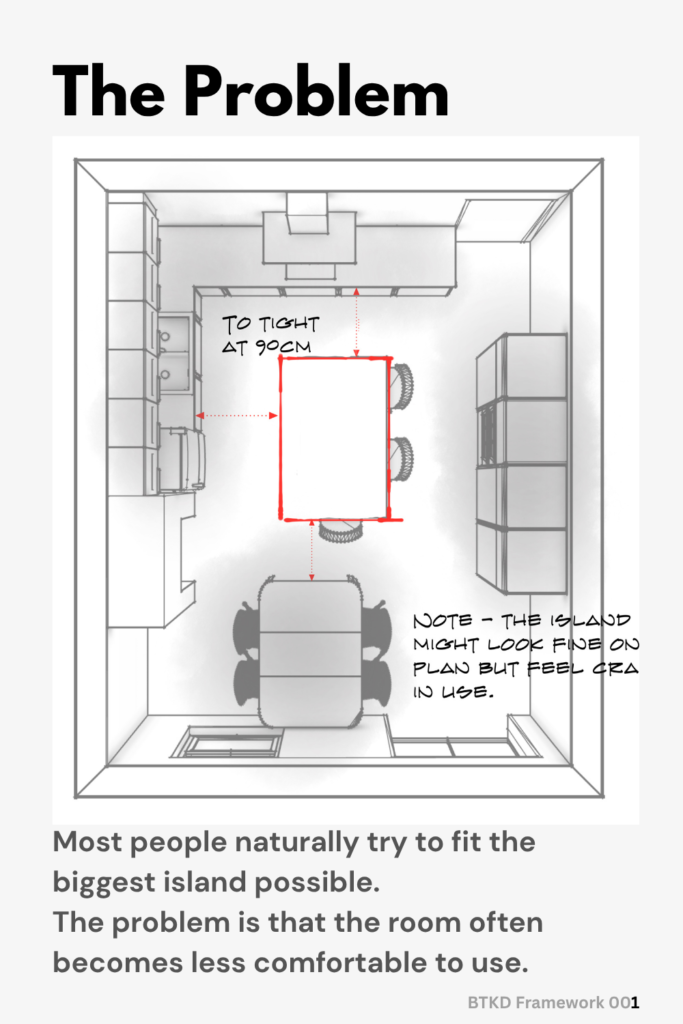
The issue is rarely the island itself. It is the relationship between the island and everything around it. The kitchen still needs space for people to move comfortably, open cupboards and appliances, stand at the worktop, pass behind someone who is cooking and use seating without blocking the room. An extra 200 or 300mm added to an island can look insignificant on a drawing, but it can make a surprisingly large difference to how the kitchen feels every day.
Why spacing around an island matters
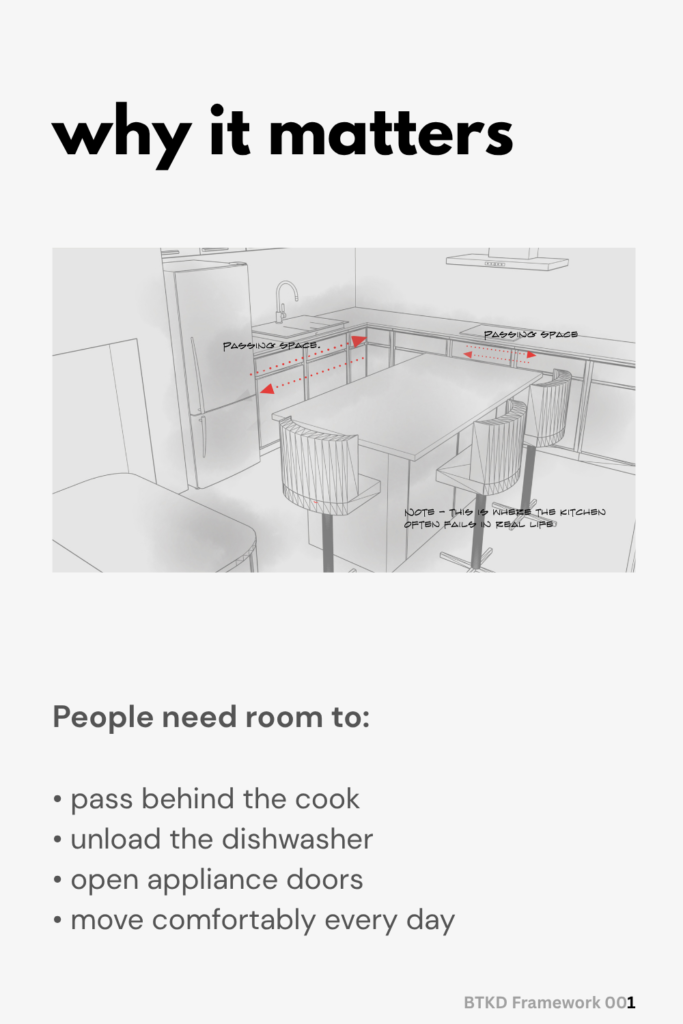
Good spacing is what allows an island to work without dominating the kitchen. Too little space and two people working opposite each other can quickly get in each other’s way. Dishwasher and oven doors become obstacles, stools interfere with circulation, and what looked generous on the plan starts to feel cramped. The aim isn’t simply to hit a particular measurement; it’s to leave enough space for the way the kitchen will actually be used.
How much space should you leave around a kitchen island?
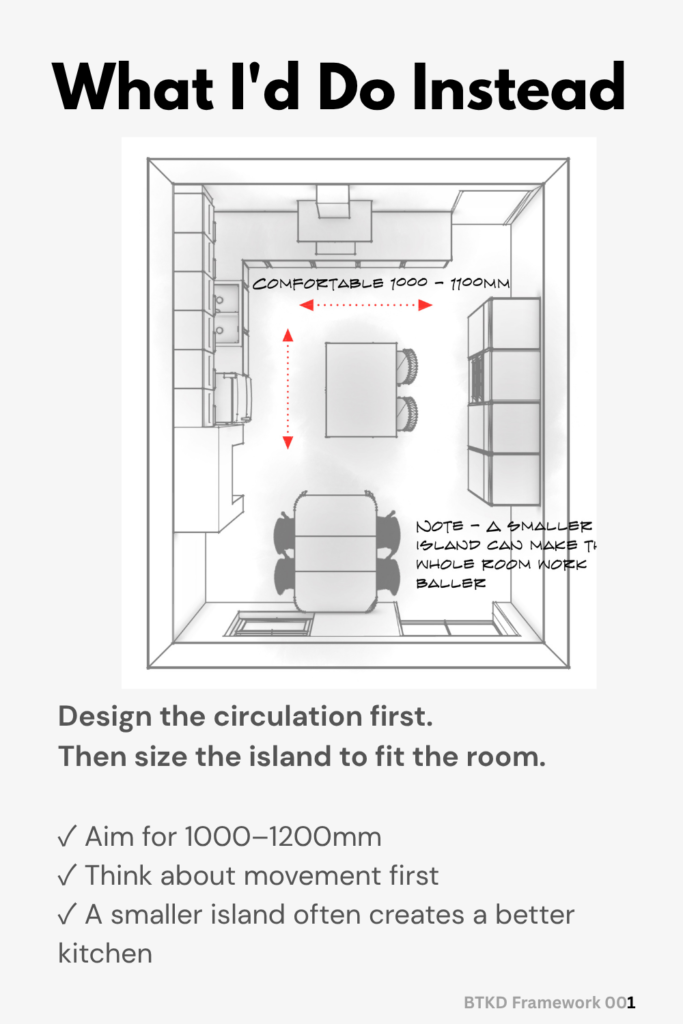
As a starting point, I generally like to see around 1000–1200mm of clear space around an island. That gives the kitchen room to breathe while still keeping the island connected to the working area. But I wouldn’t treat those numbers as a rule that overrides everything else. A compact kitchen used mainly by one person may work perfectly well with less, while a busy family kitchen, a main route through the room, or an area where people regularly pass behind stools may benefit from more.
A better island isn’t necessarily a smaller island
The point isn’t to make every island small. In a large room, a substantial island can be exactly right. What matters is proportion. The island needs to feel appropriate to the room, the surrounding cabinetry and the way people will move through the space. If the room comfortably supports a large island, there is no reason not to have one.
The principle
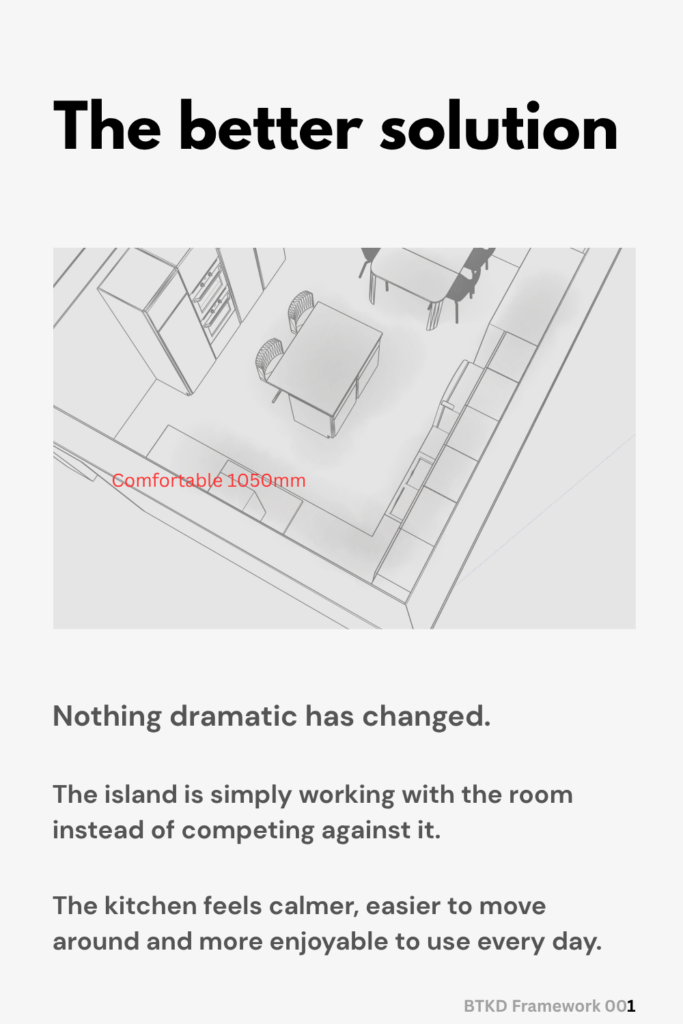
Don’t size an island by asking how large you can make it. Size it by asking how much space the room needs around it.
Start with circulation, appliance doors, seating and the way people will actually use the kitchen. Once those spaces work comfortably, the island can take up what is left. In many kitchens, taking a little away from the island gives far more back to the room.

Want an independent second opinion on your kitchen plans?
Get a Kitchen Clarity Review →